Hardwood Floor Water Damage in Sherman
Raised edges and uneven boards reveal stress within a wet floor, but appearance alone cannot settle its future. Sherman hardwood restoration examines the boards, fastening condition and supporting layers before repair choices are made.
(888) 527-9134Discuss wet wood floor changes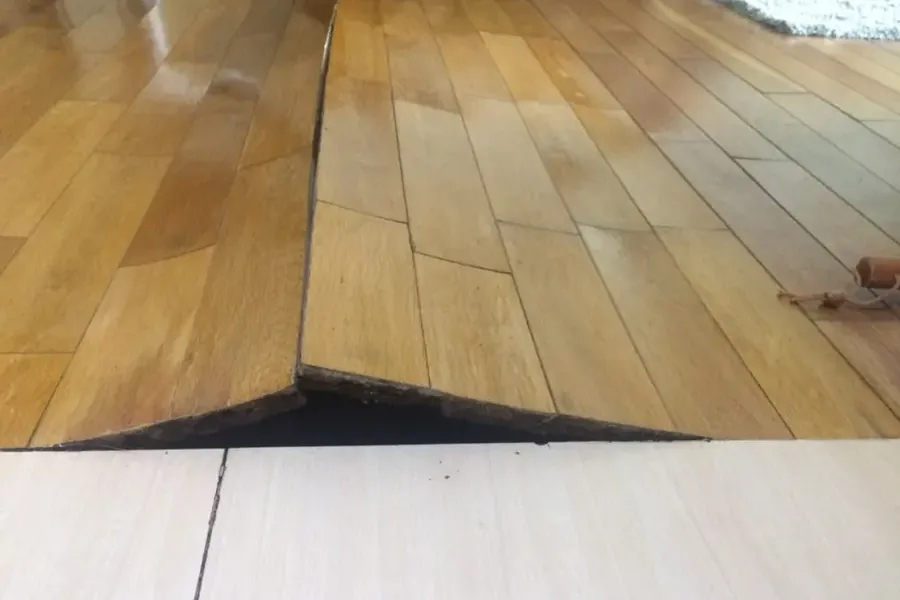
First steps for hardwood floor water damage
- 1Keep weight off raised sections
Avoid walking across lifted or loose boards and keep furniture movement limited. Wet flooring may be vulnerable to additional damage while its condition is being assessed.
- 2Document the shape changes
Photograph cupping, gaps and discoloration from safe positions. Note which areas changed first and whether the movement followed a known leak or continuing dampness.
- 3Leave refinishing off the schedule
Do not treat sanding as the first response to uneven boards. Material readings and source correction should establish whether the floor is ready for finish decisions.
- 4Describe connected floor areas
Identify adjoining rooms with the same covering and any inaccessible edges beneath cabinetry. Those details help determine inspection boundaries and access needed for underlying moisture assessment.
What does hardwood floor water damage cost in Sherman, TX?
Sherman hardwood restoration costs depend on board condition, supporting layer moisture and access for recovery. These ranges describe mitigation options; replacement flooring, finish matching and installation work should be identified separately from the drying assessment.
- Limited board exposure
- Accessible reference readings
- Focused drying arrangement
- Supporting layer assessment
- Specialized moisture removal
- Repeated condition checks
- Extensive board movement
- Selective material removal
- Connected room evaluation
Planning ranges depend on water category, affected square footage, material class and how quickly drying starts. The water damage cost calculator compares scope assumptions; the property inspection sets the work required.
How hardwood floor water damage proceeds
- 1
Identify construction and exposure
Inspection records the floor type, visible movement and water source, then selects accessible locations for checking boards and supporting materials within the affected area.
- 2
Compare wet and reference locations
Measurements are taken with attention to material differences and repeatable positions. Nearby unaffected areas help establish a useful comparison for the floor's drying progress.
- 3
Select access and recovery methods
Sound materials with suitable access may receive targeted drying. Damaged or contaminated components are evaluated for removal so retained supporting layers can be inspected and treated.
- 4
Prepare the repair decision record
The handoff documents moisture observations, retained boards and removal boundaries, allowing the flooring contractor to assess installation or refinishing needs after the drying work is complete.
Board edges that lift after a leak deserve a measured assessment before sanding begins. Sherman has homes from several housing eras, including pre-1950 properties around Downtown Sherman. The flooring actually present in the affected room determines the inspection approach: its construction, finish, fastening and supporting layers all matter when water changes its shape.
Inspect the floor as an assembly
Westwood Village and Pecan Grove are established residential areas. An affected floor in either setting may have moisture beneath boards that now feel dry at the surface. Readings should include accessible supporting materials and dry comparison areas, with the leak source and exposure recorded alongside the visible board changes.
- Cupping, separation and lifted sections should be photographed before furniture is moved or damaged boards are removed.
- Thresholds and cabinet edges deserve checks when water disappears beneath a continuous floor or an adjoining finish.
- Loose boards and raised sections can create trip hazards even after standing water has been removed.
Choose drying access before cosmetic repair
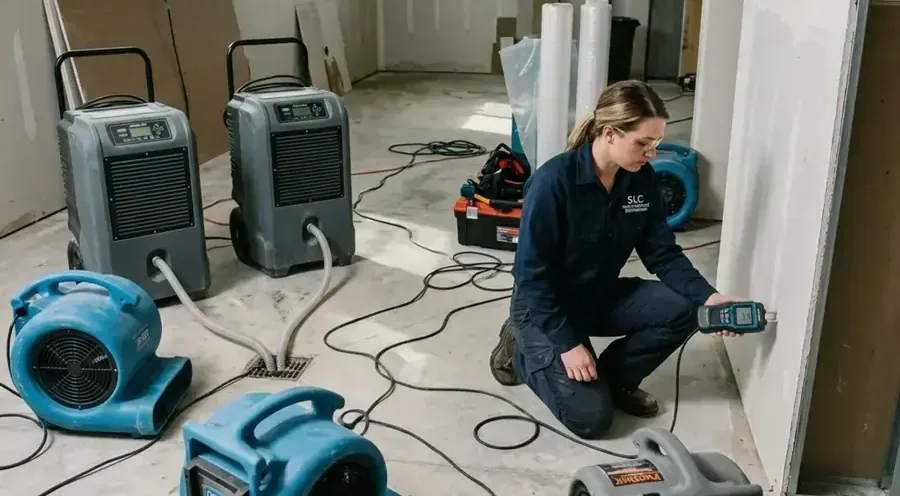
Surface air movement may not reach the underside of tightly fitted boards. Targeted equipment can help in suitable situations, but the decision depends on material condition and the ability to reach retained moisture. Contaminated exposure, damaged adhesives or severe movement can change the balance toward selective removal rather than preservation.
Sanding while moisture remains uneven can produce another shape problem as the boards continue changing. The assessment should separate drying progress from finish appearance. The supporting layer and the underside of the wood need suitable moisture conditions before refinishing, even when the varnish surface already looks dry.
- Floor measurements should be recorded at repeatable locations so changes reflect the same materials over successive checks.
- Removal decisions need to account for damaged boards and the access required to inspect what lies beneath.
- Replacement planning should consider connected rooms where the affected flooring continues beyond the obvious stain or spill.
Give the flooring contractor a useful handoff
A concealed plumbing source may connect this work with slab leak cleanup. After source correction, structural moisture tracking supports decisions about retained supporting materials. The flooring specialist can then evaluate repair or replacement against the actual assembly condition.
The final record should show the original water boundary, board movement, access openings and moisture observations. It helps explain why some sections remain while others require replacement. Finish matching and installation details belong in the repair discussion after the underlying wet materials have been assessed and the source is controlled.
Sherman hardwood floor water damage response
Hardwood assessments include O'Hanlon Ranch and Austin Landing, with the flooring actually installed, source exposure and connected room layout determining the inspection and recovery options.
The same service nearby: hardwood floor water damage in Anna, Howe, Van Alstyne.
Water damage restoration in Sherman · every town coveredRelated water damage services in Sherman
Hardwood Floor Water Damage questions
1Do cupped boards always need replacement?
Not always. Water source, physical damage and the floor construction affect recovery options. Measurements and a condition assessment are needed before deciding whether drying can support retention.
2Why avoid sanding a wet floor?
Wood can continue changing shape as moisture redistributes. Sanding before the assembly is suitably dry can leave an uneven result when the remaining moisture later leaves the boards.
3Can the surface feel dry while the support stays wet?
Yes. The underside and supporting layers can retain moisture after the finish feels dry. Accessible readings help identify that difference and shape the drying approach.
4Are drying mats suitable for every wood floor?
Equipment selection depends on construction, finish condition and exposure. A targeted system may help suitable assemblies, while other floors require selective removal or a different access method.
5What if water came from a drain backup?
Contamination changes the recovery decision. Porous flooring and concealed layers require exposure assessment before any plan to retain boards and dry the assembly in place is selected.
6When can replacement boards be installed?
Source control and suitable substrate conditions come first. The flooring contractor should assess the retained assembly and installation requirements using the drying observations and documented removal boundary.
Settle the drying question before refinishing
Floor construction, visible movement and supporting layer access shape the practical choices for retaining or replacing affected boards.