AC Leak Water Damage in Anna, TX
AC condensate can overflow a drain pan or escape from a blocked drain and soak nearby finishes. Anna restoration technicians trace that moisture after HVAC source repair, then dry the affected ceiling, closet or floor.
(888) 527-9134AC dripping? Discuss wet materials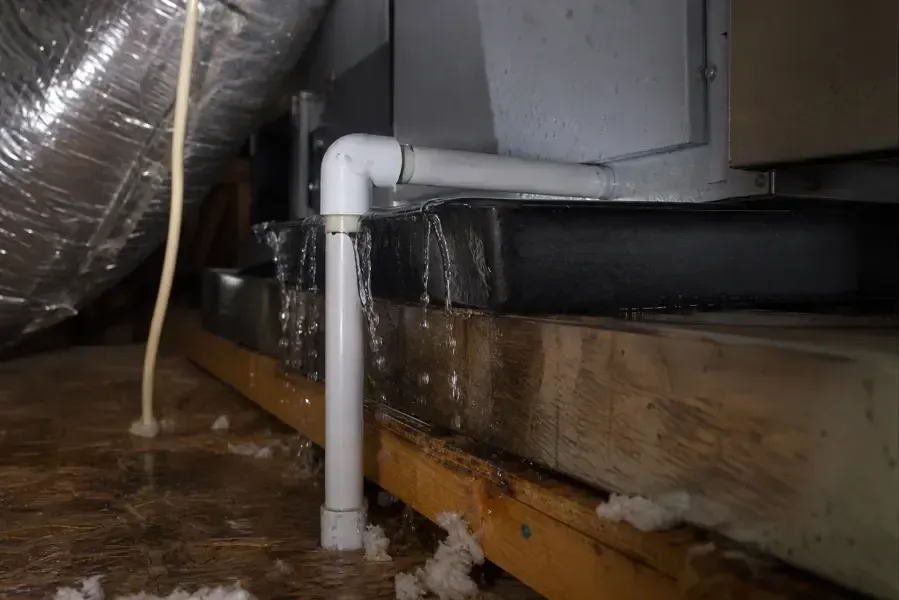
First steps for AC leak water damage
- 1Stop unsafe equipment use
Follow the HVAC professional’s advice about shutting the system down, and do not reach across wet electrical components or enter an unstable ceiling area to operate controls.
- 2Keep clear below stains
Restrict access beneath bulging ceiling material and move dry portable belongings only along a safe route that avoids dripping fixtures and wet electrical areas.
- 3Describe the equipment location
Report whether the unit is above the ceiling, in a closet or elsewhere, along with the visible water path and whether condensate is still escaping.
- 4Arrange both assessments
Request HVAC source diagnosis and water-damage inspection, so the technician can check insulation, wallboard and flooring around the equipment after the drain is cleared.
What does AC leak water damage cost in Anna, TX?
AC condensate water-damage cleanup often ranges from $700 to $3,500. Overhead access, saturated insulation and several affected finishes increase the work; HVAC repair and decorative restoration are separate costs.
- Accessible water
- Limited affected finishes
- Source diagnosis
- Insulation assessment
- Controlled access openings
- Material monitoring
- Several wet assemblies
- Difficult overhead access
- Larger drying setup
Planning ranges depend on water category, affected square footage, material class and how quickly drying starts. The water damage cost calculator compares scope assumptions; the property inspection sets the work required.
How AC leak water damage proceeds
- 1
Trace the condensate route
The restoration technician compares the HVAC findings with ceiling, wall and floor readings, locating the affected materials before planning extraction or access openings.
- 2
Remove accumulated moisture
The crew extracts pooled water and evaluates saturated insulation or finishes, protecting safe equipment access while separating damaged layers from material that can remain.
- 3
Dry the surrounding assembly
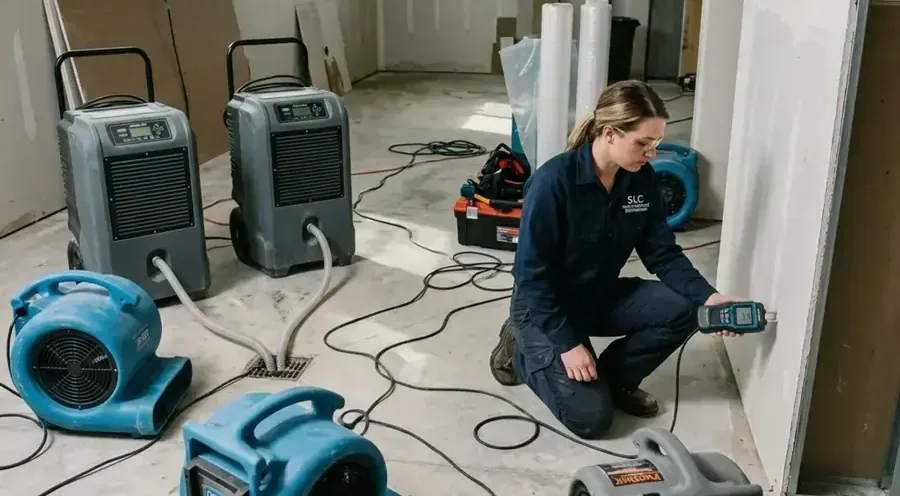
Directed airflow and dehumidification target exposed wet materials, with repeated measurements identifying enclosed corners or overhead areas that need an adjusted drying arrangement.
- 4
Confirm the two completions
The HVAC record verifies source correction, while the restoration report documents material readings and remaining finish work before the equipment area returns to normal use.
An air-conditioning system removes moisture from air, and its condensate must drain correctly. A blocked drain, damaged pan or another equipment issue can send that water into the building instead. The HVAC professional diagnoses and corrects the equipment problem; the restoration team checks the water damage around and below it.
AC leak inspection in Anna
A household near Natural Springs Park should describe where the equipment sits and where water first appeared. A closet unit can wet adjoining floor layers, while equipment above a ceiling can affect insulation and framing below. Homes near Johnson Park may have different arrangements, so the technician follows the actual installation rather than assuming a typical local layout.
- Wet insulation around the equipment can retain moisture after the visible drip stops.
- Ceiling stains and wall-base readings help trace condensate away from its source.
- Electrical components near the leak need appropriate isolation before restoration access.
Drying around mechanical spaces
Mechanical closets and overhead cavities often restrict airflow. The mitigation team identifies damaged layers and creates controlled access where necessary, preserving safe service space around the equipment. A fan aimed at a closed closet door cannot demonstrate that the wall behind the unit is dry.
The drying specialist checks the surrounding wood, drywall and accessible floor assembly. Dehumidification controls the room while directed airflow supports evaporation from exposed material. The setup should not interfere with HVAC service work, equipment clearances or safe household circulation.
- Extraction removes accumulated water before the crew evaluates remaining cavity moisture.
- Damaged insulation and absorbent finishes receive separate recovery or removal decisions.
- Monitoring continues at the same locations until readings support the drying handoff.
Confirming both the drain repair and the dry-out
Along West White Street, the service request can identify an accessible entrance and the equipment location without requiring a homeowner to climb into a wet attic. The HVAC technician should confirm condensate drainage after repair. The restoration record should separately show the condition of materials that became wet before that repair.
The EPA WaterSense information supports household water awareness. The Ready.gov flood safety information addresses electrical and structural hazards around water. Keep equipment-service findings with the moisture map and ceiling or wall photographs. That sequence explains why a corrected drain may still leave drying and finish repairs to complete.
Anna AC leak water damage response
ZIP 75409 includes the service area around Natural Springs Park, West White Street and Slayter Creek Park. Describe the affected rooms and safe access when requesting restoration.
See the covered communitiesRelated water damage services
AC Leak Water Damage questions
1Does clearing the condensate drain finish the job?
It can stop the source, but nearby building materials may remain wet. The restoration technician checks insulation, walls, ceilings and floor layers independently of the HVAC repair.
2Can a small condensate drip cause concealed damage?
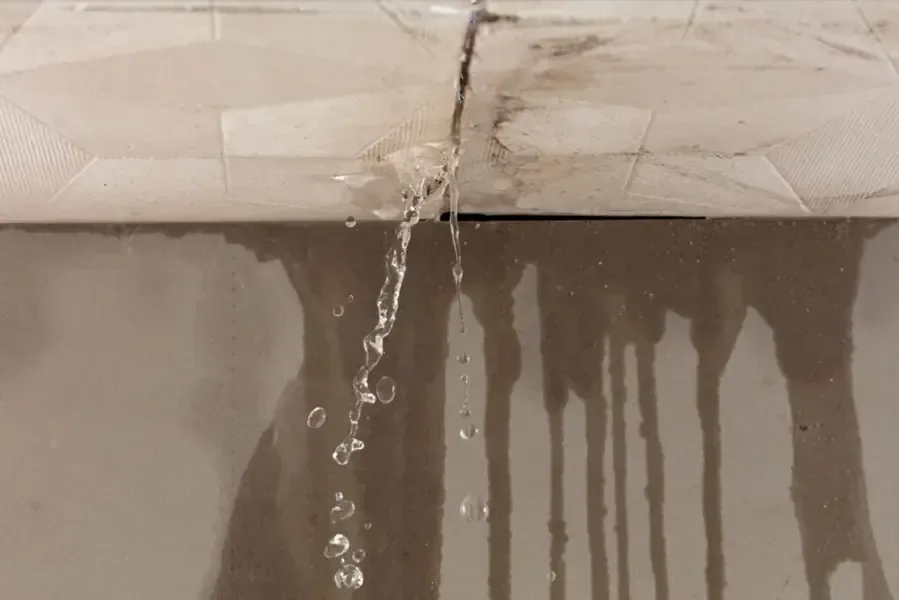
Yes. Continued dripping can wet an enclosed space without creating a large visible puddle. Moisture readings help identify the affected assembly beyond the first stain or damp edge.
3Should the AC keep running during cleanup?
Follow the HVAC professional’s instructions for the affected system. The restoration team should coordinate its drying setup with safe equipment operation and source correction.
4Why inspect insulation near the unit?
Insulation can retain water and obstruct airflow against surrounding materials. Its condition and location affect whether it can remain or must be removed for proper drying access.
5What if the ceiling stain is far from the unit?
Water can travel along framing or the back of a ceiling panel. The technician follows readings and accessible cavity conditions instead of assuming that the stain marks the exact source.
6What helps a 24/7 AC-leak request?
Give the equipment location, current drip status and any ceiling or electrical concern. Describe safe access and affected rooms so the response team can plan the initial assessment.
A clear drain needs dry materials around it
24/7 water-damage response checks the structure after HVAC source correction and records the remaining drying work.