AC Leak Water Damage in Sherman
Condensate can soak a platform or ceiling before water appears in the occupied room. Sherman AC leak restoration coordinates equipment service with inspection of the surrounding insulation, framing, wall finishes and concealed floor edges affected below.
(888) 527-9134Discuss escaped AC condensate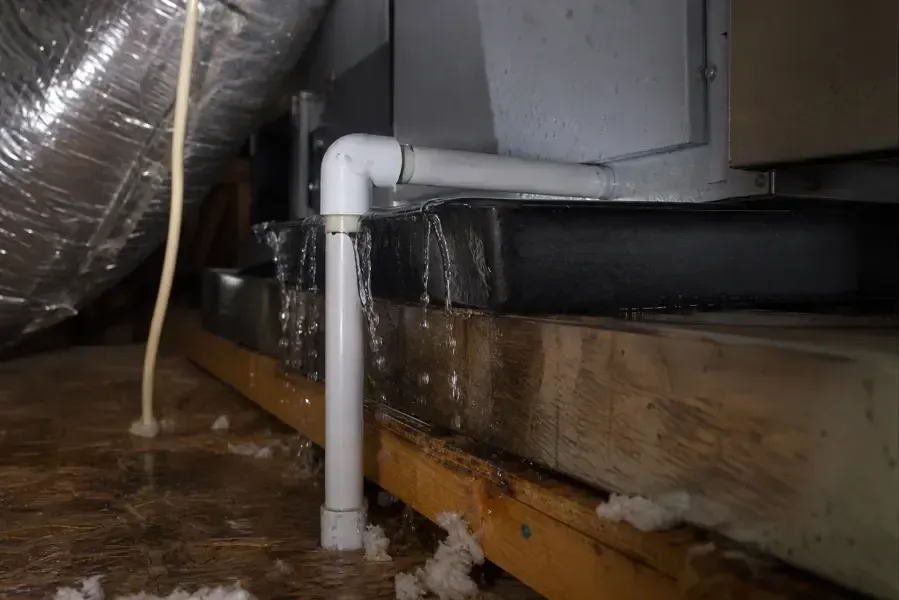
First steps for AC leak water damage
- 1Arrange equipment source assessment
Describe the pan, drain and visible water to the cooling service contact. Wet controls or uncertain electrical conditions require appropriate professional attention before anyone works around the unit.
- 2Keep unsafe attic areas unoccupied
Do not enter an overhead space with wet surfaces or uncertain footing. The room below also needs restricted access where ceiling materials have softened or begun to sag.
- 3Document the path into the room
Photograph staining, wall streaks and affected stored items from a safe location. Note whether the visible leak changes while the cooling equipment operates or remains stopped.
- 4Preserve access beside the installation
Move only dry belongings that can be reached safely. Leave damaged surfaces available for assessment so equipment service or replacement trim does not conceal the wet area.
What does AC leak water damage cost in Sherman, TX?
AC leak mitigation costs in Sherman depend on equipment access, concealed insulation and the interior surfaces reached by condensate. These ranges describe restoration work; cooling system service and replacement finishes need separate scope identification.
- Accessible platform surfaces
- Localized floor moisture
- Limited finish exposure
- Wet insulation assessment
- Selective cavity access
- Framing moisture checks
- Broader assembly saturation
- Multiple affected finishes
- Complex equipment access
Planning ranges depend on water category, affected square footage, material class and how quickly drying starts. The water damage cost calculator compares scope assumptions; the property inspection sets the work required.
How AC leak water damage proceeds
- 1
Connect service findings with the damage
The assessment compares condensate source information with wet ceilings, platforms and walls, establishing the building materials requiring restoration beyond the equipment repair itself.
- 2
Inspect enclosed contact surfaces
Accessible insulation, framing and finish edges are checked for retained moisture and physical damage. Openings are selected to reach wet layers or remove materials unsuitable for recovery.
- 3
Dry the retained equipment surroundings
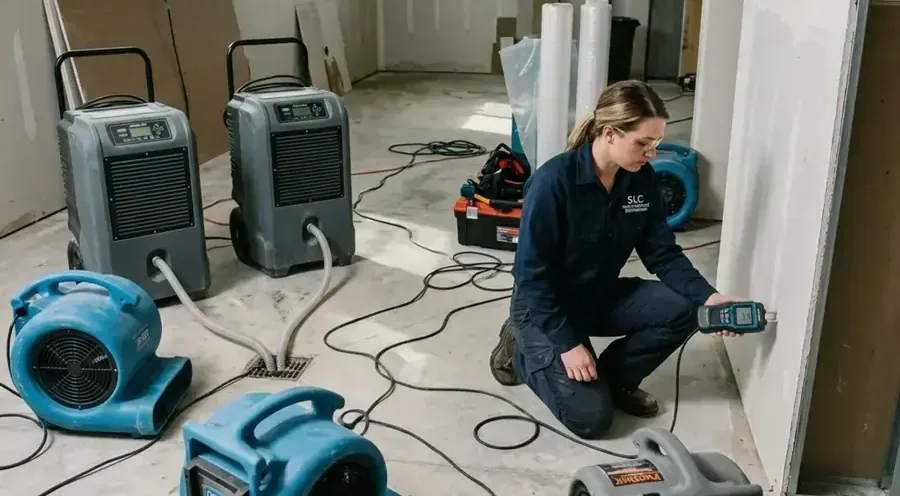
A drying arrangement addresses recoverable surfaces after source control, with equipment positioned around safe access needs and the space required for separate cooling system work.
- 4
Record conditions before finish replacement
The handoff identifies source service status, exposed materials and final moisture observations so replacement ceiling or enclosure finishes follow assessment of the actual affected assembly.
A wet ceiling near cooling equipment can be the last visible part of a longer condensate path. Sherman has a humid subtropical climate. When an AC drain or pan problem releases water, equipment service and building restoration need separate attention: correcting drainage does not automatically dry insulation or finishes already touched by the release.
Start at the equipment surroundings
Austin Landing and Shepherd's Place are newer community options, while O'Hanlon Ranch is an established in-town neighborhood. At an affected property, the air handler's actual location determines inspection access. An attic installation and a closet installation expose different nearby surfaces, so the assessment should describe the specific platform, enclosure and rooms below.
- Report water around the pan and any stain below it without entering an attic with unsafe footing.
- Leave wet controls and electrical connections to appropriate equipment personnel before restoration work begins around the unit.
- Record the cooling service findings so the source correction remains connected with the building damage account.
Check what absorbed the condensate
Water may collect against a support platform, enter insulation or travel down the side of an enclosure. The inspection should extend beyond the drip location to accessible connected surfaces. A cabinet or closet wall can conceal dampness even after the equipment drain is flowing correctly again.
Persistent leakage may affect finish materials differently from a brief spill. Swelling, separation and retained moisture need assessment before deciding what can remain. Selective access can expose framing or other recoverable surfaces, while insulation that obstructs drying requires its own condition and removal decision.
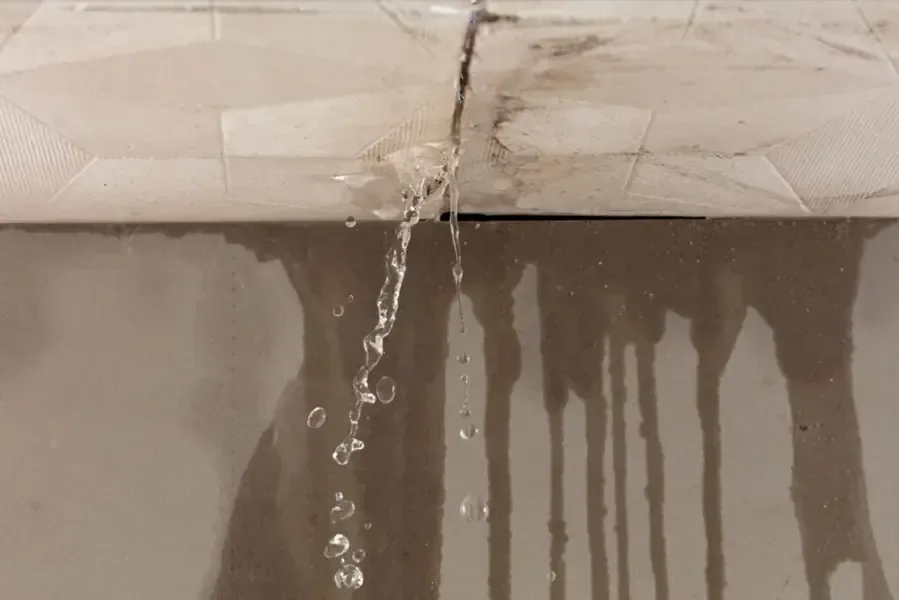
- Ceiling seams and upper wall corners can indicate migration away from the equipment's most obvious drip point.
- Stored items near a closet installation may obstruct the inspection and hold moisture against surrounding finishes.
- Drying equipment needs safe power and clear access without interfering with the separate cooling system service work.
Coordinate the final service and repair handoff
Ceiling restoration addresses damaged overhead finishes when condensate reaches a room below. Structural drying tracks retained framing and surrounding materials after source correction. The equipment technician's drain findings should accompany the restoration observations so each part of the repair has a clear owner.
The closing record identifies the affected platform or enclosure, materials removed and moisture readings used to assess progress. Replacement ceiling or wall finishes should follow suitable material conditions, with the condensate source addressed before concealed surfaces are covered and the space returns to normal use.
Sherman ac leak water damage response
AC leak assessments include Heritage Ranch and Westwood Village, with air handler location, surrounding material access and the observed condensate path determining the building restoration scope.
The same service nearby: ac leak water damage in Anna, Howe, Van Alstyne.
Water damage restoration in Sherman · every town coveredRelated water damage services in Sherman
AC Leak Water Damage questions
1Does clearing the condensate drain finish the job?
Drain service addresses the equipment source. Insulation, platforms and nearby finishes that already absorbed water need their own inspection to determine drying access and any necessary material replacement.
2Can condensate travel away from the air handler?
Yes. Water can follow supporting surfaces or framing before showing inside a room. Inspection should connect the equipment surroundings with the stain rather than assuming they align vertically.
3Why inspect a closet wall beside the unit?
Water can soak the wall base or concealed side of an enclosure. Those surfaces may stay wet after the visible spill has been wiped up or the drain corrected.
4Should an owner inspect a wet attic alone?
Wet footing, wiring and limited support can make attic access unsafe. Appropriate personnel should assess the equipment area while occupants remain clear of weakened ceiling materials below.
5Will the ceiling need complete replacement?
Condition and the extent of hidden moisture determine removal. Some sections may remain when safe access and drying are possible, while unstable finishes or inaccessible wet insulation require different decisions.
6What should the service and drying records include?
The records should connect the condensate problem, affected surfaces, removed materials and moisture observations. That helps separate cooling equipment repair from the remaining building restoration and finish replacement tasks.
Follow the water beyond the cooling equipment
Source service notes and nearby material changes help define access, drying and the handoff for replacing affected finishes.