AC Leak Water Damage in Howe
Cooling equipment can release water slowly enough to hide the damage above a ceiling or behind a closet wall. Cleanup traces the condensate path and checks the supporting materials after the equipment fault is addressed.
(888) 527-9134Discuss escaping AC condensate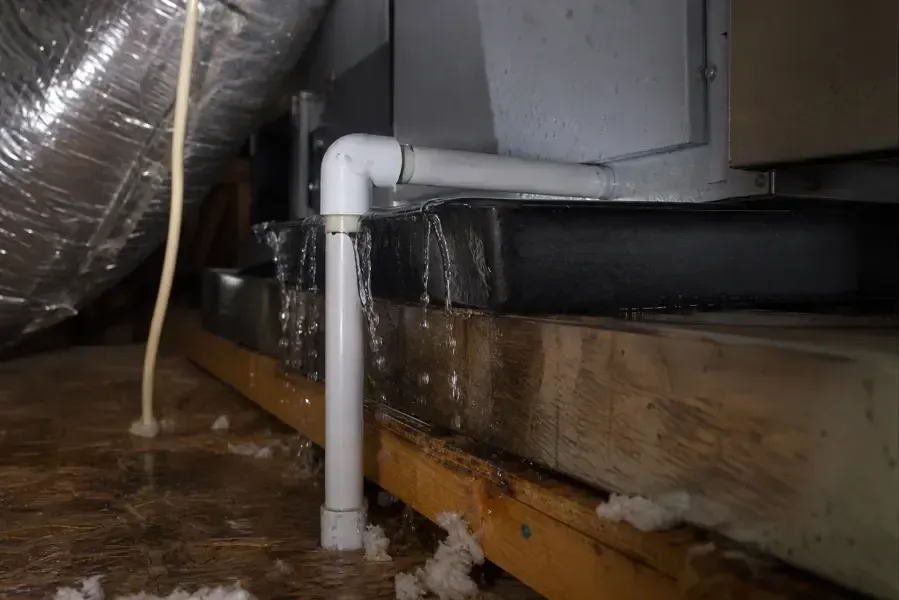
First steps for AC leak water damage
- 1Report the equipment relationship
Notes about cooling operation and changing drips help trace the condensate path. Include the first ceiling or closet symptom and any later water appearing in a neighboring room.
- 2Stay clear of wet controls
Water near electrical equipment needs safe assessment. Occupants should avoid touching connections or entering a wet attic area while source service and building access are being coordinated.
- 3Protect the space below safely
Dry contents outside unstable ceiling sections can be relocated. Items directly under loose or swollen material should wait until the overhead condition permits a safe approach and handling plan.
- 4Coordinate service and inspection access
The equipment service opening can help expose affected materials. Restoration checks should be arranged before the surrounding panel, ceiling or closet finishes are closed after the AC repair.
What does AC leak water damage cost in Howe, TX?
AC leak cleanup in Howe depends on equipment location and concealed material exposure. Wet insulation, unstable ceiling finishes or a restricted closet can increase access and drying needs after condensate drainage is corrected.
- Localized base moisture
- Accessible equipment surroundings
- Limited wet finishes
- Insulation assessment access
- Overhead surface protection
- Directed cavity drying
- Connected room exposure
- Restricted assembly openings
- Broader material removal
Planning ranges depend on water category, affected square footage, material class and how quickly drying starts. The water damage cost calculator compares scope assumptions; the property inspection sets the work required.
How AC leak water damage proceeds
- 1
Connect symptoms with condensate escape
Inspection traces the visible damage toward the equipment area and checks adjoining materials. Cooling service addresses the fault while restoration establishes the building's wet boundary and access needs.
- 2
Expose the retained water path
Openings expose insulation, ceiling backing or closet materials. Damaged layers are evaluated and accessible water removed before the remaining assembly receives drying equipment.
- 3
Measure the drying response
Equipment placement follows the exposed surfaces and surrounding room conditions. Repeated material checks show whether concealed pockets need additional access or a revised approach to moisture removal.
- 4
Record equipment and material completion
The handoff distinguishes restored equipment drainage from completed building drying. It also identifies removed finishes, insulation decisions and remaining reconstruction so the next work follows the assessed condition.
An AC leak in Howe may first appear as a ceiling ring, wet closet trim or recurring dampness below an air handler. The visible symptom can sit away from the equipment as water follows supports or finish seams. Cleanup should connect that symptom with the condensate route and the building materials along it.
Distinguish equipment drainage from building recovery
A cooling technician can assess the pan, drain and equipment condition. The restoration inspection addresses what happened after condensate escaped those components. Safe access matters because water can collect near electrical connections or above ceiling finishes. Occupants should describe visible changes without entering an unsafe attic or touching wet equipment controls.
- Note whether dripping changes when the cooling system operates or stops running.
- Describe damp trim, ceiling seams and flooring below or beside the equipment location.
- Keep access to the closet or attic opening clear without stepping into damaged overhead materials.
Inspect the spaces around the air handler
A home approached from Farm Road 902, U.S. Highway 75 or State Highway 5 still needs an interior access plan suited to its equipment location. An attic unit, closet installation and adjacent room each present different paths for inspection. The wet surfaces, supporting materials and ceiling stability determine what can be reached safely.
Insulation can retain condensate near the unit while the room below shows only a narrow stain. Selective access may be necessary to assess that layer and any wet backing. Ceiling leak cleanup explains the overhead material decisions when escaped water has weakened the finished surface or reached adjoining walls.
Check the assembly before closing access
Once equipment drainage is corrected, moisture readings show what remains in the surrounding building. Drying should reach exposed wet surfaces rather than merely move air through the occupied room. A damp closet base or concealed ceiling pocket may require a different opening or equipment arrangement as the material response becomes clear.
Structural drying supports that measured recovery. The closeout should separate the AC service from the moisture work and identify any insulation or finish replacement still needed. Closing an access panel or painting a stain should follow the material assessment so the remaining wet assembly is not hidden behind a cosmetic repair.
Howe ac leak water damage response
AC leak cleanup serves Howe properties in ZIP 75459. The work follows the equipment location, condensate travel and moisture retained in surrounding ceiling, wall or floor materials.
The same service nearby: ac leak water damage in Anna, Van Alstyne, Sherman.
Water damage restoration in Howe · every town coveredRelated water damage services in Howe
AC Leak Water Damage questions
1Can a small condensate leak cause hidden damage?
A slow release can repeatedly wet enclosed materials before a large puddle appears. Insulation, ceiling backing and closet bases need assessment when the water path reaches them.
2Does clearing the AC drain dry the ceiling?
Drain correction addresses the equipment fault. Moisture already held in the ceiling assembly or surrounding insulation still requires inspection and a material drying plan.
3Why does the stain sit away from the unit?
Water can follow supports, seams and other surfaces before dripping through the ceiling. The visible mark may therefore be only one point along a longer concealed path.
4Should occupants enter the attic to inspect the pan?
Wet attic access can involve unsafe footing and electrical equipment. Visible room symptoms can be reported while a safe approach to the unit and surrounding materials is arranged.
5Can the closet simply be aired out?
Room air may not reach water behind wallboard or beneath equipment supports. The inspection determines whether enclosed materials need access, removal or a more directed drying arrangement.
6What belongs in the final repair record?
The record should distinguish AC service, moisture treatment and remaining finish replacement. It helps explain which equipment problem was corrected and which building materials were assessed or removed.
Dry the building around the AC equipment
Restoration should account for insulation, backing and adjoining materials that remain wet after the pan or drain problem is corrected.