Water Heater Leak Cleanup in Princeton
Water around a heater can disappear under a closet wall before the puddle looks large. Cleanup needs a safe equipment assessment and a close look at the surrounding materials, not just the tank location.
(888) 527-9134Discuss water around the heater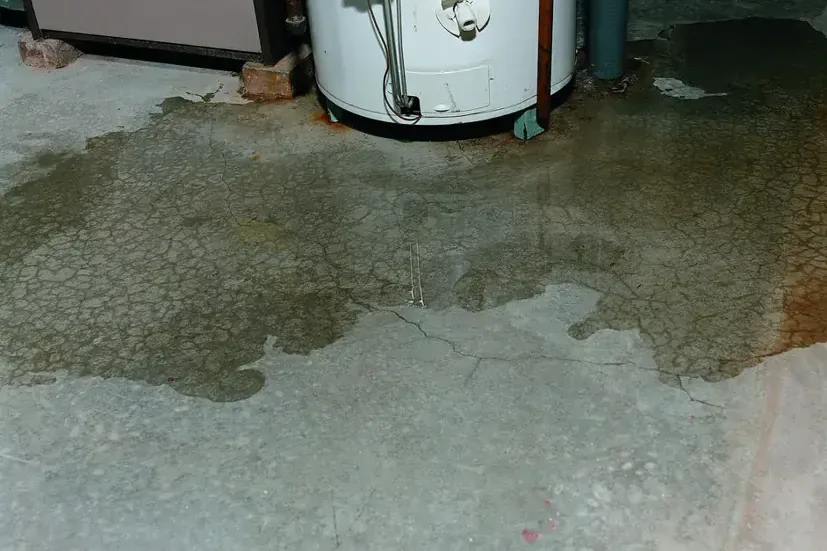
First steps for water heater leak cleanup
- 1Avoid wet equipment controls
Keep clear of electrical parts and hot equipment where water is present. Describe the conditions from outside the enclosure so safe source service can be arranged.
- 2Limit an accessible water supply
Use a reachable shutoff only if access is dry and safe. If the valve cannot be reached safely, report the continuing flow without entering the affected space.
- 3Check adjoining rooms visually
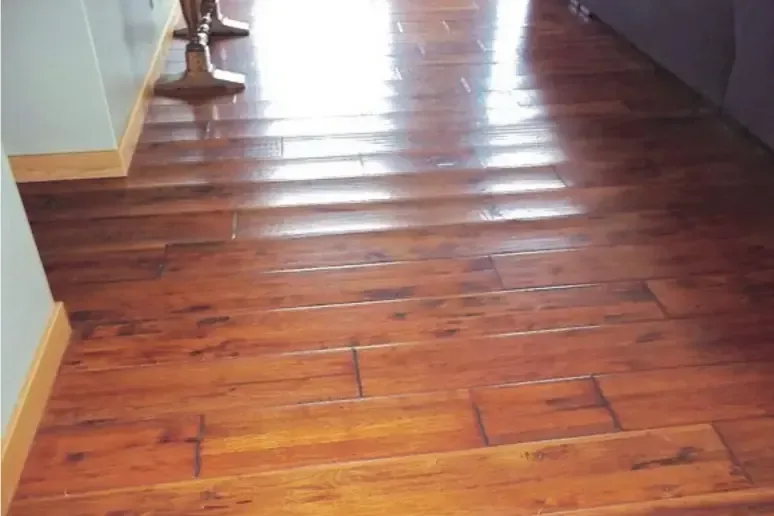
Look for damp trim, changed floor seams or water beneath nearby storage from safe areas. Those details help define the assessment beyond the heater footprint.
- 4Keep records of separate work
Retain equipment service information alongside cleanup photographs. Distinguishing the source repair from material restoration makes the remaining scope easier to understand before enclosure repairs begin.
What does water heater leak cleanup cost in Princeton, TX?
Water heater leak cleanup costs in Princeton depend on enclosure access and spread into adjacent finishes. The restoration estimate should identify water removal and material recovery separately from heater service or replacement.
- Open enclosure access
- Localized liquid recovery
- Nearby surface checks
- Wet partition edges
- Connected flooring layers
- Additional drying placement
- Hidden enclosure moisture
- Expanded material access
- Damaged finish replacement
Planning ranges depend on water category, affected square footage, material class and how quickly drying starts. The water damage cost calculator compares scope assumptions; the property inspection sets the work required.
How water heater leak cleanup proceeds
- 1
Assess equipment-area access
The water source status and enclosure hazards are established first. Wet surfaces, storage and adjoining partitions determine which areas can be inspected without unsafe equipment contact.
- 2
Remove water around the unit
Accessible liquid is recovered after the area is safe to work in. Floor edges and the neighboring room are included where the leak has spread.
- 3
Evaluate enclosure materials
Wallboard, trim and floor layers receive moisture and condition checks. Findings identify needed openings and materials that cannot recover through drying because of physical damage.
- 4
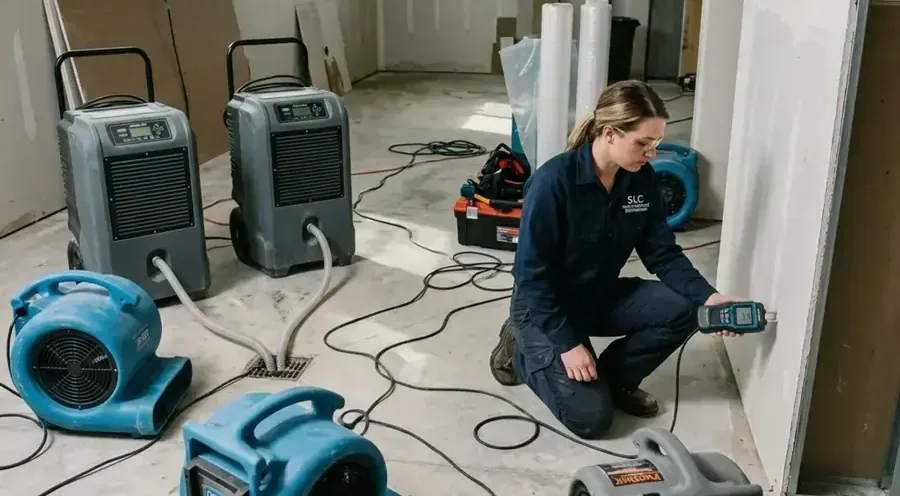
Dry and document retained layers
Equipment placement targets the exposed assembly and repeated readings show progress. The handoff identifies remaining finish work and coordinates access around applicable inspections or equipment service.
The heater may be the obvious source area, but the surrounding enclosure determines much of the cleanup. Water can collect beneath the unit, enter wallboard at its base or run through a doorway into finished flooring. Princeton water heater leak assessment follows those routes while keeping equipment repair separate from the recovery of wet building materials.
Control the release without entering an unsafe enclosure
Water near electrical components or heated equipment needs careful access decisions. Occupants should describe the leak and equipment condition from a safe location. An accessible supply shutoff may limit further water, but approaching wet controls or moving the unit is not an appropriate first cleanup step. Source service should establish how the equipment can be handled safely.
- Report whether water is actively flowing or remains pooled after the source was isolated.
- Identify wet belongings or stored containers that conceal the enclosure floor and wall edges.
- Keep the access route clear without touching wet electrical components or unstable equipment.
Check the enclosure and the next room
A property in Cypress Bend may have water emerging at a nearby baseboard, while a home in Monte Carlo may first show damp flooring outside the equipment space. These possible symptoms require assessment of the actual layout. The location of the tank alone cannot define the wet boundary or the extent of floor-layer access.
Once accessible water is removed, the surrounding trim, cabinet bases where present and wallboard should be checked for absorption. The water removal scope may include an adjoining room where liquid traveled beneath the door. Material condition then determines which layers can dry in place and which need access or replacement.
- Examine the wall opposite the enclosure for moisture crossing through a shared partition.
- Check flooring transitions where trapped water may remain after the open surface clears.
- Document swelling or separation that drying will not reverse in damaged finish materials.
Finish the building work after equipment service
For an affected home in Arcadia Farms, a repaired or replaced heater still leaves the surrounding moisture to address. Princeton's building information lists most construction and remodeling as requiring permits. Any applicable building work and inspection access should be coordinated with the drying sequence before an opened enclosure is repaired.
Structural drying tracks the condition of the retained wall and floor materials. The final scope should distinguish equipment service, water mitigation and reconstruction. This makes it clear why a functioning heater and a dry-looking floor are useful milestones while concealed moisture or damaged finishes can still require further attention.
Princeton water heater leak cleanup response
Water heater leak assessments cover Princeton properties including Cypress Bend, Monte Carlo and Arcadia Farms. The work follows the equipment enclosure and the actual path into surrounding rooms.
The same service nearby: water heater leak cleanup in Anna, Farmersville, Van Alstyne.
Water damage restoration in Princeton · every town coveredRelated water damage services in Princeton
Water Heater Leak Cleanup questions
1Can the tank be moved before cleanup?
Equipment handling needs a safe service plan. Wet electrical parts, connections and access restrictions can make moving the unit hazardous, so source service and restoration access should be coordinated.
2Does a drain pan contain every leak?
The assessment must establish where water actually traveled. Water outside the pan, beneath flooring or along wall edges requires attention even when part of the leak remained near the heater.
3Why inspect the wall outside the closet?
Moisture can cross through the base of a partition. Checking both sides helps identify absorbed water and determines whether access is needed beyond the equipment enclosure itself.
4Will heater replacement dry the surrounding floor?
Replacing the source equipment addresses a different task. Retained water beneath finishes and inside wall materials still needs removal or drying based on the condition found during assessment.
5What if the leak stopped before discovery?
The visible pool may shrink while absorbent layers remain wet. Inspecting the enclosure perimeter and nearby flooring helps locate moisture that is no longer apparent at the surface.
6When can the enclosure be repaired?
Retained materials should reach an appropriate dry condition and any required inspection access should be complete. Damaged finishes can then be replaced as part of the documented repair scope.
Recover the materials around the equipment
Discuss the closet, adjoining floor and visible wall damage to separate source service from the building recovery work.