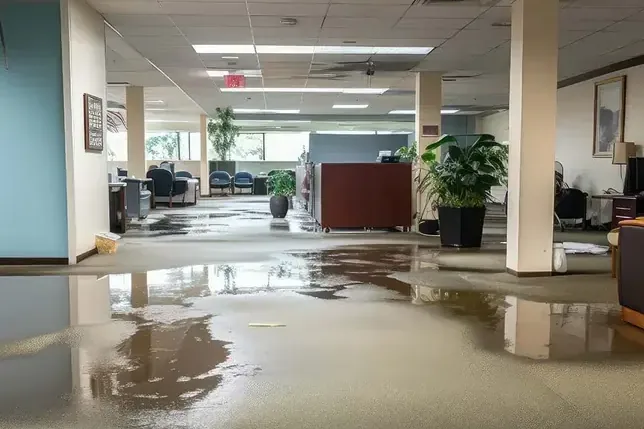
The public town square anchors Farmersville's commercial district. For a business dealing with indoor water, the immediate challenge is protecting people and stock while making room for cleanup. A useful plan identifies the affected trading area, the equipment route, and the decisions needed from the owner before merchandise or building finishes are moved.
Key takeaways
- Suspend access to the affected trading area until hazards are assessed.
- Assign someone to approve stock movement and maintain the inventory.
- Separate customer access from restoration equipment and wet materials.
- Tie reopening decisions to the condition of each work zone.
- Keep building repairs, contents handling, and business records distinct.
Map the premises by business function
A shop or office can have a public entrance, a stockroom, a staff area, and an equipment space with different access needs. The first sketch should mark those functions alongside the visible water route.
This helps the owner explain which activities must pause and which areas may be considered separately after their safety and condition are assessed.
Main Street and McKinney Street are part of the city's downtown brick surface repair project. Within the affected premises, the commercial water damage assessment should establish the actual entry and work arrangements for that business.
Delivery access, employee arrival, and restoration equipment movement need a shared plan that everyone on site can understand.
- Mark customer areas and staff only spaces on the room sketch.
- Identify stock that cannot be moved without an owner's decision.
- List entrances needed for equipment and deliveries.
- Keep the affected perimeter visible to arriving employees.
Assign decisions before moving merchandise
Inventory work goes faster when a designated person can answer questions about stock ownership, handling restrictions, and recordkeeping. The restoration team should know which items can be moved promptly and which need an individual decision.
This avoids placing a wet carton beside unaffected goods simply because it was the closest available shelf.
Each item group should retain a link to its original location. Photographs of shelf levels, floor stacks, and nearby wet surfaces help explain why some goods require assessment while others can be protected in place.
The owner should keep disposition decisions separate from assumptions about resale condition and obtain the appropriate advice for the particular products involved.
- Label temporary storage areas before transferring goods.
- Photograph unopened packages as well as visibly damaged packaging.
- Record who approved disposal or relocation.
Keep source work visible in the operating plan
City Hall is the local contact for electric, water, and sewer emergencies or repairs at any hour. If a public service issue accompanies the indoor loss, the business should retain the report details and instructions received.
A private fixture or appliance problem should also have a clearly assigned repair contact so the interior work has a known source status.
The manager needs a concise statement of what remains active, what has been isolated, and what access the repair trade requires. That information belongs in staff updates because a closed valve, an unavailable restroom, or a restricted equipment area can affect operations beyond the wet floor.
Staff should receive practical access instructions without being asked to diagnose the cause themselves.
Create an equipment route through the premises
Hoses and machines need room to operate without blocking a safe exit or forcing employees through standing water. The work route should be considered before stock is stacked in a corridor.
Once safety permits, the water extraction crew can identify a practical recovery sequence that follows the affected floor areas and the business's actual layout.
Fixed counters, display bases, and heavy equipment can conceal wet material at the perimeter. The scope should identify those obstructions and explain whether inspection is possible around them or whether coordinated movement is required.
A clear access decision prevents a machine from being placed where it dries only the exposed aisle while moisture remains beneath a fixture.
- Keep approved exits clear throughout the work.
- Reserve a controlled location for removed wet materials.
- Discuss power and equipment placement before operations resume.
- Protect unaffected stock from the movement route.
Divide drying progress into useful work areas
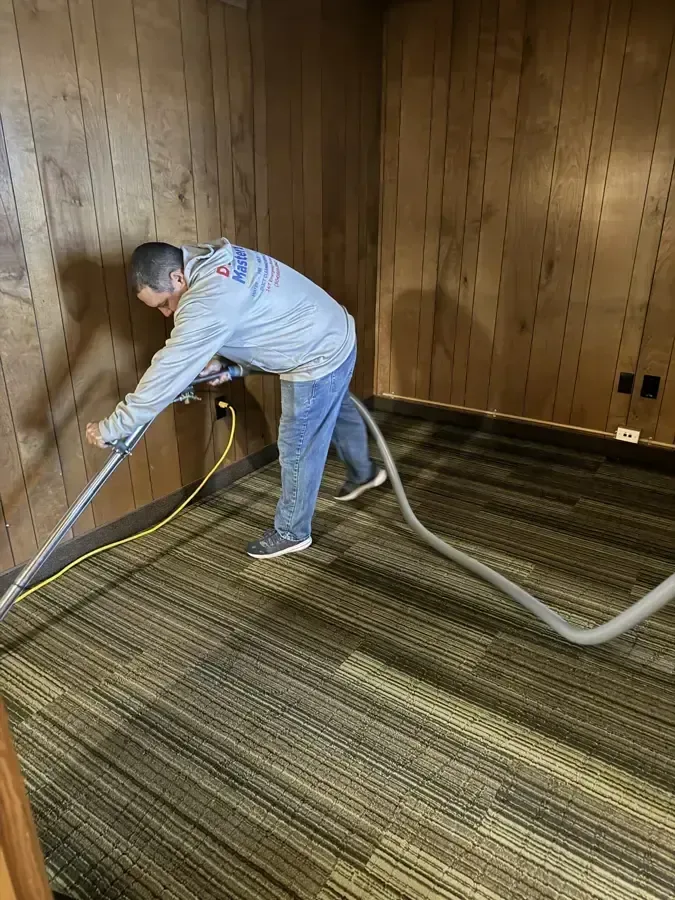
The public sales floor and a rear storage room may respond differently during drying because their finishes and access differ. The structural drying plan should identify the materials checked in each area and keep those records easy to compare.
A single statement about the entire building can obscure the section that still needs attention.
Equipment adjustments should be linked to the monitored surfaces and remaining wet layers. If stock blocks an important wall base, the next decision may involve relocation rather than simply adding another machine.
The manager should receive an explanation of the operational impact, including spaces that remain restricted and any access required for the next inspection.
Schedule finish work around the next usable space
A practical repair sequence identifies what can be completed without disrupting an area already cleared for use. Replacing a section of trim, reinstalling a display, and returning goods to storage may involve different people and access requirements.
The schedule should place those tasks in an order that preserves the drying work and avoids repeated handling of the same stock.
Historic Onion Shed and the Chaparral Trailhead are established downtown landmarks. For nearby businesses, the relevant restoration decision remains the condition of the particular premises and its operating needs.
Owners should request a room specific handoff before advertising a reopening date, with any remaining construction or equipment restrictions written plainly for staff.
Preserve records that answer later business questions
The incident folder should connect building conditions with business decisions: which rooms closed, which stock moved, which source repairs occurred, and which finishes remain unfinished. Dated photographs and labeled room notes help make that connection.
Financial and coverage questions can then be discussed using a record that describes the actual work and interruption rather than a broad estimate of the event.
Farmersville has a humid subtropical climate with hot, humid summers. During an indoor dryout, the completion decision should still come from monitored materials and the agreed work scope.
The closing conversation should identify the areas released for use, the final contents location, and the person responsible for every remaining task before equipment leaves the premises.
Questions
Can part of a business stay open during cleanup?
That decision requires an assessment of access, electrical conditions, contamination, and the separation of work areas. A manager should receive a clear boundary and operating restrictions for any area proposed for continued use, with safe exits preserved throughout the project.
Why should merchandise be recorded before moving it?
Its original position helps explain contact with water and protects the integrity of the inventory. A labeled transfer record also prevents goods from being misplaced when shelving, packaging, or display arrangements change during cleanup and repair.
Who should answer restoration questions when the owner is absent?
The business should designate a representative who understands approval limits and can reach the owner for unresolved decisions. The team needs a dependable contact for contents movement, access arrangements, and repair sequencing, particularly when several trades are working at the premises.
What should be checked before stock returns to a repaired area?
The manager should confirm the space has been released for its intended use and that outstanding finish work will not require the stock to move again. The inventory should show which goods are returning and identify any items still awaiting a separate condition decision.